The modern wellness movement has reshaped how people think about health. It’s no longer just about avoiding illness, but about living with balance, energy and clarity. Traditional Chinese Medicine (TCM), with its focus on harmony, prevention and the interconnectedness of body and mind, aligns naturally with these values.
Acupuncture in the age of holistic health
Acupuncture has become one of the most recognised “alternative” therapies in the UK. Beyond managing pain, many people now seek it for stress relief, better sleep, and overall wellbeing. This matches the wellness industry’s emphasis on mind–body therapies and personalised health.
Herbal medicine and functional nutrition
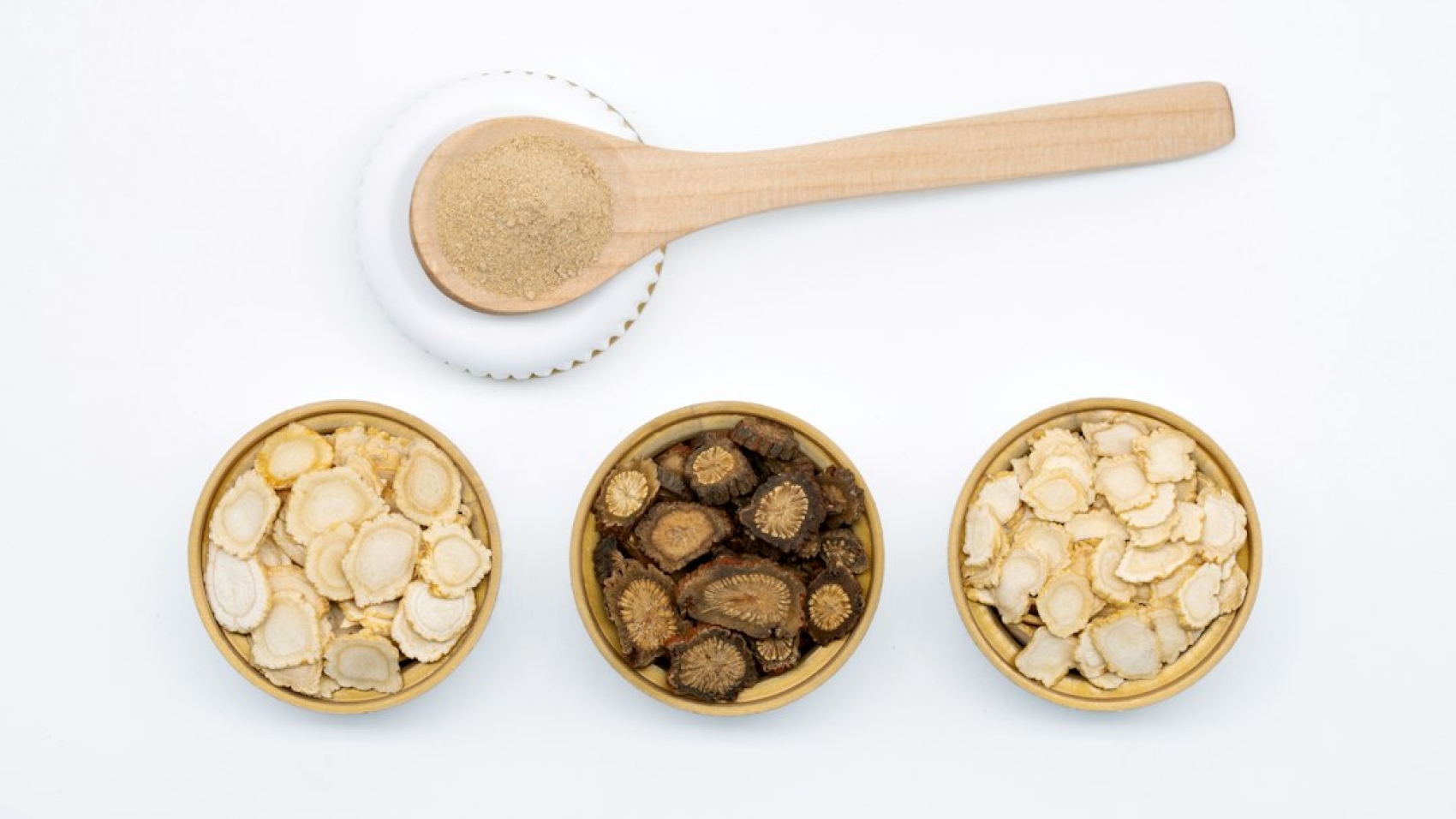
Wellness seekers are increasingly turning to plant-based supplements, superfoods and adaptogens. Chinese herbal medicine offers a time-tested parallel. Whether through THR-marked over-the-counter products or practitioner-prescribed formulas, TCM herbal approaches connect directly with modern interest in natural, functional nutrition.
Movement therapies and mindfulness
Tai chi and qigong, long-standing pillars of TCM, fit seamlessly alongside yoga and meditation in today’s wellness landscape. Both practices cultivate mindfulness, reduce stress, and improve posture, balance and flexibility — making them a valuable complement to Western wellness trends.
The UK’s growing appetite for alternative medicine
Searches for “alternative medicine UK” and “holistic health” continue to rise. More people are seeking therapies that support mental health, immunity and lifestyle balance. TCM contributes by offering a holistic model where prevention, diet, movement and therapy work together.
What integration means for practitioners and patients
For practitioners, integrating TCM with wellness trends means speaking the language of today’s health-conscious consumer: balance, sustainability, mindfulness, resilience. For patients, it means more accessible, relatable ways to engage with TCM — from acupuncture sessions for stress, to herbal teas for daily wellness, to tai chi classes for mindful movement.
The opportunity lies in positioning TCM not as an “alternative” but as a partner in holistic living.
FAQs
How does TCM fit into modern wellness? By aligning with holistic practices like yoga, meditation and functional nutrition, TCM supports balance and preventative health.
Why is acupuncture popular in wellness culture? Because it offers stress relief, pain management, and improved sleep — all central wellness goals.
Can herbal medicine be part of a wellness routine? Yes. Many people use herbal teas, supplements and adaptogens daily, reflecting TCM’s long tradition of food and herbs as medicine.
Is TCM considered alternative medicine in the UK? Yes, but its growing recognition in guidelines (e.g. acupuncture for chronic pain) and consumer interest places it closer to mainstream integrative health.
Ask most people in the UK to make a cup of tea and you’ll get a builder’s brew with milk and two sugars. Nothing wrong with that. But in China, tea has a much wider meaning. Flowers, dried fruit, roasted grains and roots all get steeped in hot water, and a lot of families have a favourite blend that’s been passed down for generations.
These are seven of ours. They’re simple, they use ingredients you can find in any Asian supermarket, and most take less time than waiting for the kettle to boil twice. We’ll also cover a few safety points, because herbal doesn’t automatically mean harmless, and one popular ingredient in particular deserves a bit of respect.
Key takeaways
Chinese herbal teas are made from flowers, fruit, grains and roots rather than tea leaves, so most are caffeine free.
Herbal teas count towards your daily fluid intake, just like water or a regular cuppa.
Liquorice root tea can raise blood pressure if you drink a lot of it. Go easy, and skip it if you have high blood pressure or heart problems.
Honey sweetens nicely, but never give it to babies under one.
Enjoy these for taste and comfort. They aren’t a treatment for anything.
Why bother with herbal tea?
Partly flavour. A cup of chrysanthemum tea tastes nothing like anything you’d get in a British tea bag, and once you’ve had good rosebud tea you’ll understand why people get a bit evangelical about it.
Partly hydration, too. Plenty of us don’t drink enough, especially in winter when cold water feels like a chore. The British Nutrition Foundation points out that herbal and caffeine free drinks count towards your fluid intake, and suggests around six to eight glasses of fluid a day for most adults. A pot of something warm and fragrant is a pleasant way to get there.
And partly ritual. Making a pot of tea forces you to stop for five minutes. That’s no small thing on a busy day.
The basics
A few tips before we start, because they apply to almost every recipe below.
Rinse dried flowers and fruit in cold water before brewing. They can be dusty, and a quick rinse wakes the flavour up. Use water just off the boil for flowers, since boiling water can turn delicate petals bitter. Fruit, roots and grains can take full boiling water. A glass teapot is lovely because you can watch the flowers open, but a mug and a saucer for a lid work fine.
Most of these can be topped up with fresh hot water two or three times. The flavour gets lighter each time, which some people actually prefer.
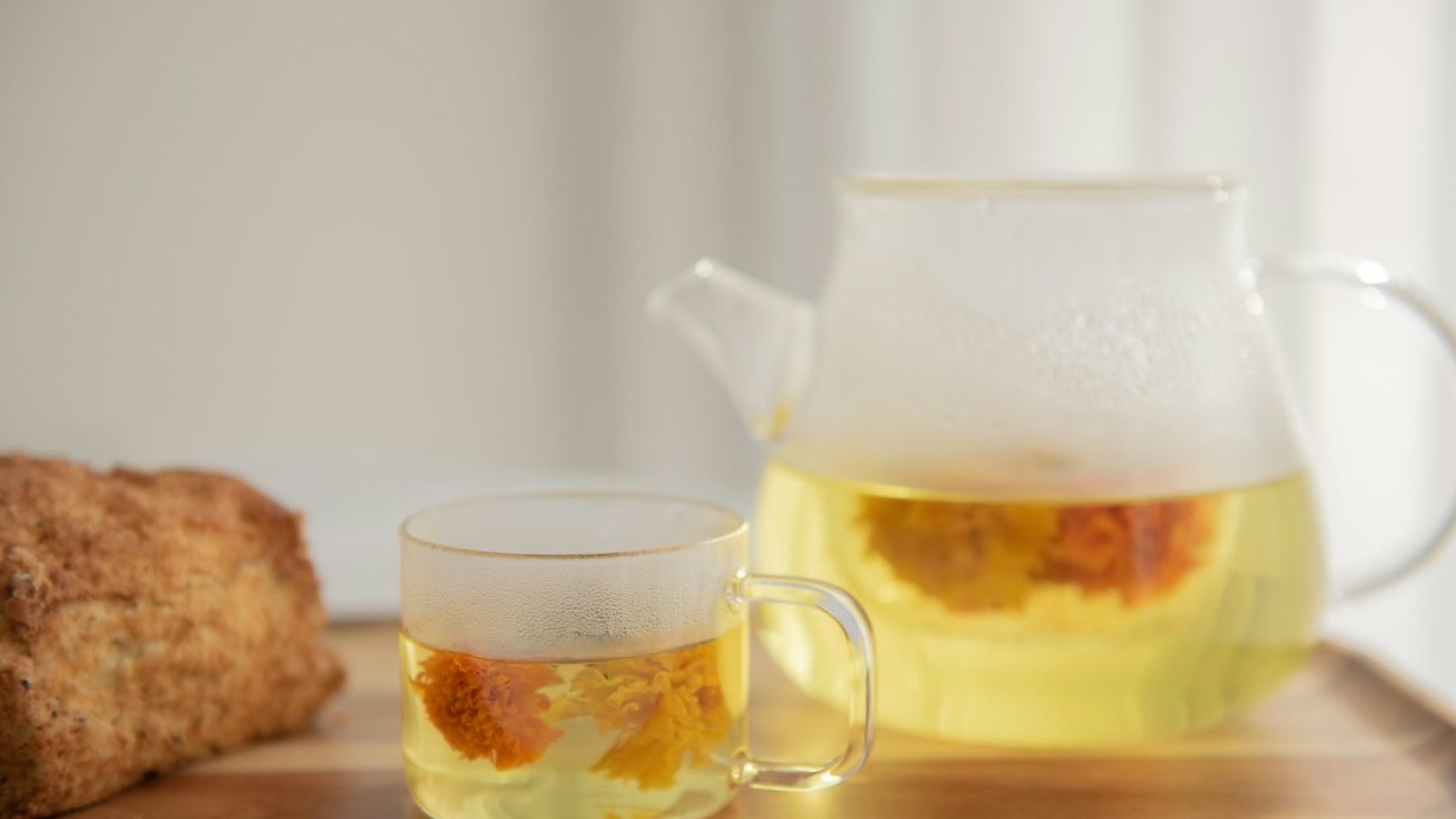
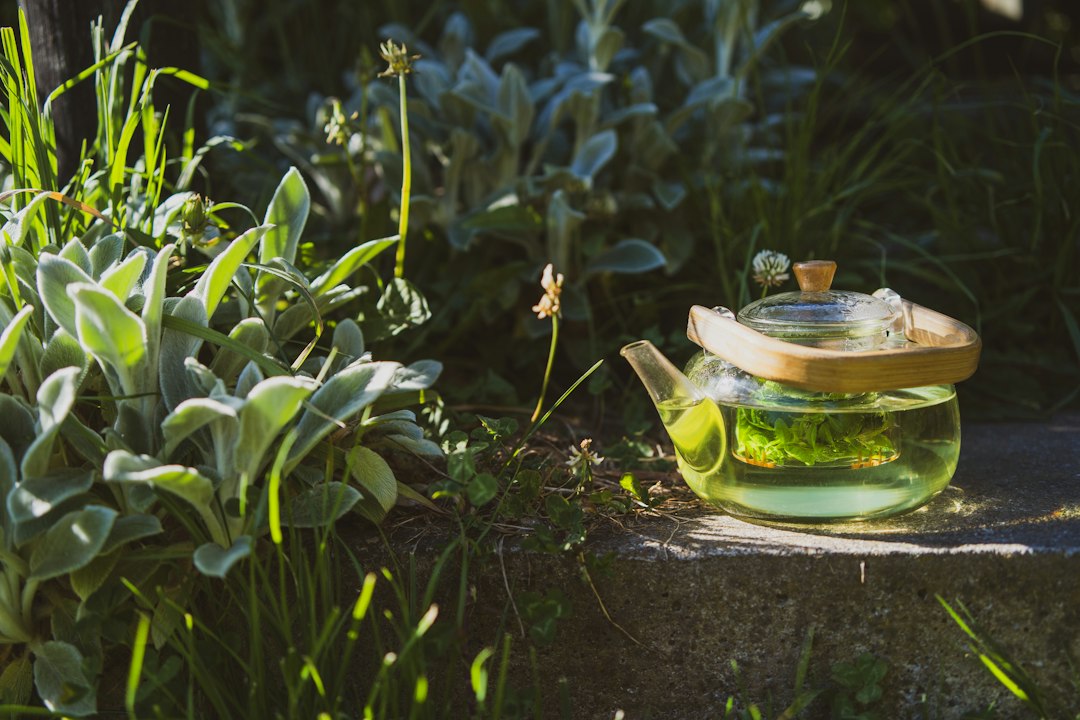
A glass teapot lets you watch flowers unfurl, though any mug will do the job.
1. Rosebud tea
Dried rosebuds are tiny, tightly closed pink buds with a scent that fills the kitchen the moment hot water hits them. The tea is softly floral and very slightly sweet. It’s the one we make when friends come round who say they don’t like herbal tea.
Use about a tablespoon of buds per mug, rinse them and pour over water just off the boil. Leave five to eight minutes. Much longer and it can turn a bit bitter, so there’s no need to stew it for ages. A small spoonful of honey suits it, or try it with a couple of goji berries for colour.
2. Chrysanthemum and goji tea
Probably the most famous Chinese herbal tea, and you’ll find it in every dim sum restaurant. The small dried yellow or white chrysanthemum flowers give a clean, lightly bitter, slightly honeyed flavour that’s very refreshing after a rich meal.
Rinse a small handful of flowers (around 5 to 8 heads per mug) and add a few goji berries. Pour over hot water and leave ten minutes. Some people add a piece of rock sugar, which is milder than regular sugar. In summer, chill it and drink it cold. If you’ve got a bag of goji berries you’re not sure what to do with, our goji berry guide has plenty more ideas.
One note. Chrysanthemum is in the same plant family as ragweed and daisies, so if you have hay fever triggered by those plants, try a weak cup first and see how you get on.
3. Honeysuckle iced tea
Dried honeysuckle flowers make a gently sweet, slightly grassy tea that works best cold. It’s a proper summer drink.
Cover two tablespoons of dried flowers with about 500ml of hot water and give it a stir. Let it cool to room temperature, then strain it and put it in the fridge. We tell people to strain before chilling, because leaving flowers soaking in a jug overnight isn’t the best idea from a food hygiene point of view. Serve over ice with a sprig of mint and a slice of lemon. Keep it in the fridge and drink it within a day or two.
4. Fresh ginger tea
Easy, warming and great on a cold, wet afternoon, which in Britain is most afternoons from October to April.
Thinly slice a thumb sized piece of fresh ginger (no need to peel it, just give it a scrub). Put the slices in a small pan with about 400ml of water and simmer gently for ten minutes. Pour into a mug, add a squeeze of lemon and a little honey, and drink while it’s hot. Want it spicier? Simmer it longer or add more ginger. Too fiery? Top it up with hot water.
Ginger tea in normal amounts is fine for most people. If you’re taking blood thinners and planning to drink several strong cups a day, mention it to your pharmacist.
Most of these brews can be topped up with hot water two or three times.
5. Red date and longan tea
This is a cosy, naturally sweet tea that tastes almost like a dessert. Red dates (dried jujubes) and dried longan fruit are both staples in Chinese kitchens, and together they make something rich and comforting.
Rinse 4 or 5 red dates and tear or slice them open. Add a small handful of dried longan flesh and a couple of slices of ginger if you want a bit of warmth. Simmer in about 600ml of water for 20 minutes, then pour into cups. Don’t throw the fruit away. It’s lovely to eat once it’s soft. You can read more about red dates and how to cook with them in our guide to Chinese kitchen herbs.
6. Roasted barley tea
Barley tea (mai cha in Chinese) is hugely popular across East Asia, and it’s a great one if you like a toasty, nutty flavour. It tastes a bit like a light coffee with no bitterness, and it’s naturally caffeine free, so it’s a good evening choice.
You can buy roasted barley loose or in tea bags. For loose, simmer a tablespoon in 500ml of water for five to ten minutes and strain. It’s just as good cold. In Japan and Korea, families keep a jug of it in the fridge all summer.
Worth knowing: barley contains gluten. If you have coeliac disease, this one’s not for you.
7. Peppermint with a little liquorice (with a warning)
Liquorice root is used in lots of herbal blends because it’s naturally very sweet. A few slices with dried peppermint makes a tea that tastes sweet without any sugar at all.
Here’s the thing, though. Liquorice root contains glycyrrhizin, which can raise blood pressure. The British Heart Foundation explains that glycyrrhizin can raise blood pressure and cause fluid retention, even in modest amounts, and that liquorice teas carry this risk too. They suggest people with high blood pressure or heart disease avoid or limit liquorice, and that anyone who has it regularly checks product labels.
So we treat liquorice as an occasional extra, not an every day thing. A couple of thin slices in a big pot of mint tea now and then is very different from three strong cups of liquorice tea a day for months. If you have high blood pressure, heart or kidney problems, or you’re pregnant, give this one a miss and stick with plain peppermint.
Quick guide
Tea
Flavour
Brewing
Rosebud
Floral and soft
5 to 8 minutes, water just off the boil
Chrysanthemum and goji
Clean, lightly bitter
About 10 minutes
Honeysuckle
Sweet and grassy
Cool, strain, then chill
Ginger
Warm and punchy
Simmer 10 minutes
Red date and longan
Rich, almost a pudding
Simmer 20 minutes
Sweetening and storing
Most of these teas don’t need much sweetening, and some taste better without it. If you do want something, honey and rock sugar both work. Just remember that babies under twelve months should never be given honey.
Store dried flowers, fruit and roots in airtight jars away from light and damp. Flowers lose their scent fastest, so buy smaller bags and use them within a few months. If anything smells musty or shows signs of mould, bin it.
When to check with a professional
Herbal teas are drinks, and in normal amounts most suit most people. Please ask your GP, midwife or pharmacist first if any of these apply.
You’re pregnant or breastfeeding and planning to drink a lot of any one herbal tea.
You have high blood pressure, heart disease or kidney problems, especially before drinking anything with liquorice.
You take regular medication, including blood thinners or blood pressure tablets.
You notice headaches, swollen ankles or palpitations after drinking liquorice tea. Stop and speak to your GP.
Frequently asked questions
Do herbal teas count towards my water intake?
Yes. Herbal and caffeine free teas count towards your daily fluids, the same as water, milk or a regular cup of tea.
Which of these teas are caffeine free?
All seven are made without tea leaves, so they’re naturally caffeine free. If you buy a blend that mixes flowers with green or black tea, check the label.
Is liquorice tea safe?
An occasional cup is fine for most people. Drinking a lot of it regularly can raise blood pressure, so we’d skip it altogether if you have high blood pressure, heart or kidney problems, or you’re pregnant.
Can I drink chrysanthemum tea if I have hay fever?
Maybe. Chrysanthemum is related to ragweed and daisies, so try a weak cup first. If your eyes itch or your throat feels odd, stop.
Can I reuse the flowers?
Yes, most flowers and fruit can be topped up with hot water two or three times. Just don’t leave them sitting around wet for hours before the next brew.
Where do I buy these ingredients?
Asian supermarkets are your best bet, and they’re usually cheaper than health food shops. Most of these are easy to find online too.
Just so we’re clear, this is general food and drink info, not medical advice. If you have a health condition, take medicine or you’re pregnant, check with your GP, midwife or pharmacist.
Medicinal mushrooms are often sold for hay fever. We look at what the research really shows, what works best for pollen allergy, and how to plan ahead for spring.
The past 18 months have had a monumental effect on the mental health of millions of individuals. The stresses of life have been stretched to breaking point, including isolation, job insecurity and losses, bereavement and financial strain. These can all contribute to mental health problems, including depression and anxiety.
Feeling down now and then is normal, with some people experiencing anxiousness at one time or another in response to stressful situations. There are many people who experience ongoing severe feelings of depression and anxiety which can be a sign of an underlying mental health condition. Tackling these thoughts and emotions can be tricky, although there are natural herbs which contain anti-depressive properties to dispel these negative thoughts.
Here are 2 great Chinese herbs which are naturally formulated to help depression and anxiety:
DRIED CAPE JASMINE FRUIT (ZHI ZI SHAN)
Dried Cape Jasmine Fruit (Zhi Zi Shan) are ripe fruits mainly found south of the Yangtze River in China. Zhi Zi (Shan) is harvested from September to November when the fruits ripen. They have a slight smell with a slight sour and bitter taste. Dried Cape Jasmine Fruit (Zhi Zi Shan) is known for its heavily fragrant white flowers and glossy green leaves and is common across the warmer regions. Zhi Zi Shan is native to China, Japan, and Taiwan, but is also found in warm climates around the world today. It is prized for its array of health benefits.
Health benefits of this medicinal herb may assist depression and anxiety by helping to lower blood pressure and help stop nausea and vomiting. Dried Cape Jasmine Fruit has also been prized for its ability to aid restlessness and fight a moderate cold. The fruit itself can be consumed as a food, or can be used in a herbal tea. Some people have used Dried Cape Jasmine Fruit in a variety of culinary recipes, including Gardenia milkshake, chocolate mousse and litchi fruit salad (recipes coming soon)!
DRIED TURMERIC RHIZOME (JIANG HUANG)
Dried Turmeric Rhizome is the dried underground stem of the turmeric plant, also known as Curcuma longa. The root is ground up into the distinctive yellow turmeric powder. Dried Turmeric Rhizome is the main spice used in Indian curries but is also one of the most powerful herbs on the planet. Some studies have proven that turmeric has more advantages than certain prescription drugs.
It is a fundamental ingredient in assisting with certain mental health disorders, including depression and bipolar disorder. The easiest way to include this into your diet is to soak the roots in water first, then grate the herb to be used as a culinary ingredient. Next time you plan a curry night, make sure to include Dried Turmeric Rhizome as part of your essential ingredients!
HOW CAN I GET THESE HERBS?
Herbs such as dried cape jasmine fruit and turmeric rhizome are sold in most Asian supermarkets, and many people enjoy them as part of everyday cooking.
If you are pregnant, take regular medication or are being treated for depression or anxiety, speak to your GP or pharmacist before using any herb medicinally.
Lion’s mane is everywhere right now. We look at what the human studies actually found on focus, mood and memory, how to eat it, and who should be careful.
Chinese medicine herbs have been prized for their health-boosting benefits for thousands of years. Many of these have been used as an anti-cancer fighter and are particularly effective when used for culinary purposes. Simply adding these herbs into your daily routine can be a brilliant way to ward off unwanted illness.
Here are 5 natural Chinese herbs that may be effective at fighting cancer:
REISHI MUSHROOM (LING ZHI)
Also known as the ‘Mushroom of Immortality’, Reishi is commonly harvested, dried and then sliced into long pieces ready for use in culinary dishes. Many people consume this mushroom for its potential anti-cancerous properties. One study found that of 4,000 breast cancer survivors, 59% consumed Reishi mushroom as part of their diet (https://bit.ly/3ApmArA). Some scientific experts have also praised this herb for its potential to kill cancer cells.
Reishi mushroom has been known to potentially increase the production of the body’s white blood cells, which can help fight cancer. This medicinal herb has been found to have a positive impact on the testosterone hormone, which may also increase its effectiveness for those suffering with prostate cancer.
Powdered Reishi can easily be consumed to assist with fighting cancer. Simply add some ground Reishi into your morning tea to make an effective, herbal drink. Click here for more recipes.
GINGER ROOT (GAN JIANG)
Prized as one of the healthiest spices on the planet, Ginger Root has a long history of use in Traditional Chinese Medicine (TCM). Properties of this herb appear to lower inflammation in the colon, an early indication that Ginger Root may be effective in treating and preventing colon cancer.
Ginger Root is particularly popular in Asian culture, as many people in India, China and Japan consume up to 2 tablespoons of ground ginger each day. Across the board, these countries have notably lower rates of colorectal cancer. This combined with their higher intake of vegetables and fibre makes a well-rounded diet to model from.
Consuming this Chinese medicine herb couldn’t be easier. Placing dried Ginger Root in tea to create a herbal remedy is an effective way to receive the anti-cancerous benefits of the root, while enjoying a tasty brew! Alternatively, if you’re more of a soft drink consumer, blending the herb together with water can create a delicious Dried Ginger Root Juice. Click here for more recipes.
WOOD EAR MUSHROOM (MU ER)
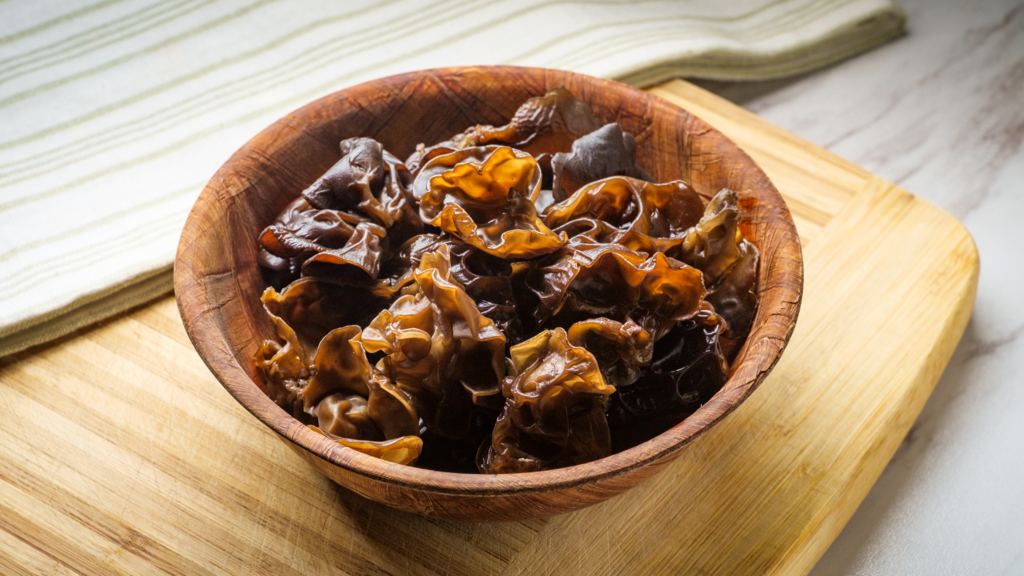
A versatile ingredient to many dishes, the Wood Ear Mushroom possesses a crunchy texture with a dark, velvety colour. High in disease-fighting antioxidants, scientific research suggests that this mushroom could help suppress and fight cancer cell growth. Other studies suggest that Wood Ear Mushroom may be effective at killing tumour cells of the bones, stomach and lungs.
The high vitamin content (B2, C, D) play a key role in improving health and the immune system, while fighting off unwanted diseases. With some suggesting that this mushroom could aid the prevention of cancer, heart disease and rheumatoid arthritis, it’s clear to see why so many people have integrated consuming Wood Ear Mushroom as part of their daily routine.
This ingredient can be added to an array of recipes to replace common white and brown mushrooms, adding a different texture. In Asian cuisine, Wood Ear Mushroom is commonly added to soups and stir-fry dishes to absorb spicier flavours. Why not try a Hot and Sour Soup or Chicken with Wood Ear Mushrooms & Dried Lily Flower?
BARLEY GRAIN (MAI YA)
One of the oldest consumed grains in the world, Barley is from the same family as oats, wheat and quinoa. Although it is not as popular as its sibling counterparts, this grain boats an impressive array of benefits, especially for anti-cancer. Whole grains contain compounds which may be effective to fight disease and killer cells, with some studies suggesting that Barley Grain has the potential to inhibit tumour growth.
A diet rich in whole grains have been scientifically researched in-depth, and may help reduce the risk of diabetes, heart disease and other chronic health conditions. Barley Grain is an extremely versatile ingredient in an array of tasty dishes. Commonly used as a substitute for rice, one portion of cooked barley has significantly fewer calories. Containing more fibre than quinoa, brown rice or wild rice, Barley Grain is a fantastic accompaniment for many culinary dishes, including soup! Try adding this ingredient alongside a delicious Herbal Chicken for a wholesome meal.
SHIITAKE MUSHROOM (DONG GU / WINTER MUSHROOM)
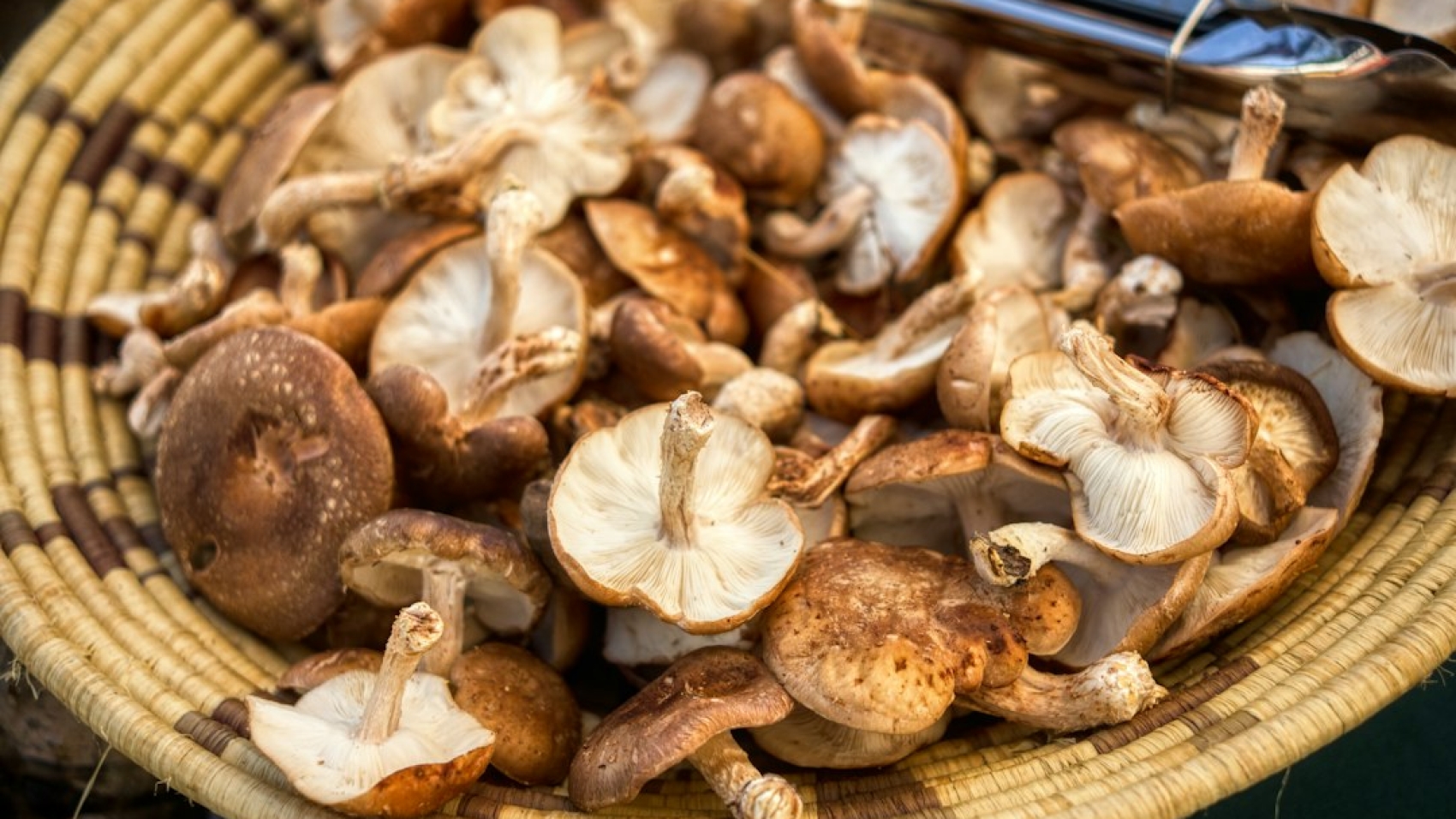
Predominantly used in East Asian cuisine, the Shiitake Mushroom is known as the best grade in its class. Native to southern Japan and South Korea, these mushrooms possess a relatively smooth cap, compared to its cracked cousin (Hua Gu). Containing anti-bacterial and anti-fungal properties, with a high vitamin D content, the Shiitake Mushroom is an effective ingredient in the fight against cancer.
Scientific research has suggested that this mushroom may have cellular-immunity-enhancing effects which may be useful to inhibit the growth of cancer tumour cells. Additional research has suggested that cancer patients who consumed Shiitake Mushroom may increase their life expectancy and positively influence their immune system’s response to cancer.
This meaty mushroom contains a smooth, tender texture and is a fantastic ingredient in stews, soups, stir fry dishes and many more. Including this in Pak Choi or Steamed Chicken with Shiitake Mushroom can ensure you receive the anti-cancerous benefits of the mushroom, while cooking up a delicious dish!
FINAL THOUGHTS
With many Chinese culinary herbs possessing potential properties to assist with cancer, it’s comforting to know that these powerful ingredients can be added to dishes and consumed easily. If you are having cancer treatment, speak to your care team before adding herbs to your diet in medicinal amounts.
As one of the healthiest beverages around, herbal tea is a fantastic way of ensuring you fill your potential with nature’s goodness. These are great for a balanced diet and an ideal candidate to promote a healthy lifestyle. Many traditional Chinese herbal teas combine several herbs in a single blend.
Goji berries had their big moment about fifteen years ago, when every health food shop seemed to sell them in little pouches with a superfood label slapped on the front. The hype has calmed down since. The berries haven’t gone anywhere, though, and in Chinese kitchens they never needed the hype in the first place. They’ve been dropped into soups, teas and congee for centuries, simply because they taste good.
So this is our down to earth guide. What goji berries actually are, what’s in them and what the research does and doesn’t show. Then the fun part, lots of ways to eat them, plus one safety point that anyone on blood thinners really should know about.
Key takeaways
Goji berries are the dried fruit of the wolfberry shrub, used in Chinese cooking for a very long time.
A 30g handful of dried fruit counts as one of your five a day. Goji is no exception.
Research is interesting but mostly early. There’s no good evidence that goji treats any disease.
There are case reports of goji tea, juice and wine affecting warfarin. If you take it, talk to your anticoagulation clinic or pharmacist first.
Soak them, cook them or scatter them on breakfast. They’re easy to use.
What are goji berries?
Goji berries come from a shrub called Lycium barbarum, sometimes Lycium chinense. In English you’ll see them called wolfberries, and in Chinese they’re gou qi zi. The best known growing region is Ningxia in north west China, where they’ve been farmed for a long time and where the berries even have their own festival.
Fresh goji berries are small, bright red and oval. They bruise easily and don’t travel well, so nearly everything you’ll find in the UK is dried. Dried goji berries are chewy, a bit like a raisin, with a flavour that’s sweet and faintly tangy with a slightly herbal, almost tomato like note at the end. That’s no coincidence, by the way. Goji is in the same plant family as tomatoes and peppers.
What’s actually in them
As dried fruit goes, goji berries are a decent everyday choice. They carry fibre and natural sugars like other dried fruit, plus a bit more protein than you’d expect. They’re also known for carotenoids, the natural pigments that give them that strong red orange colour, including one called zeaxanthin. There’s some vitamin C and a range of plant compounds that researchers have been keen to study, especially a group of sugars called Lycium barbarum polysaccharides.
None of that makes them magic. A handful of goji berries is a handful of dried fruit. A useful one, and a tasty one. Just not a replacement for a varied diet with plenty of fruit and veg.
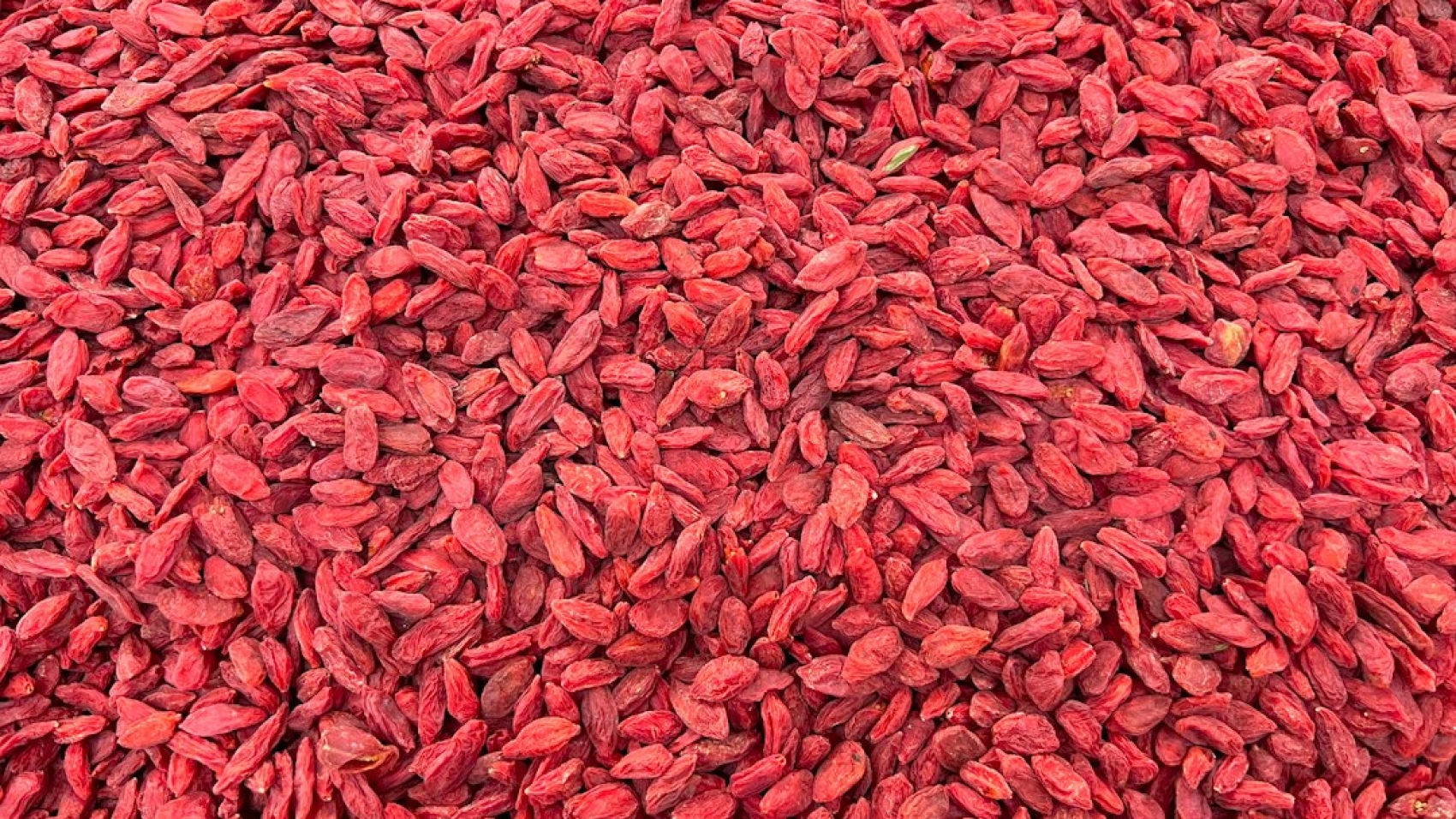
A small handful of goji berries on porridge or congee is the simplest way to start using them.
The honest bit about the research
You’ll see some bold claims online, so let’s be straight with you. Goji berries have been studied quite a lot, but much of that work is in test tubes or animals, and the human trials tend to be small and short. Some have looked at eye health, others at general wellbeing or immune markers. A few results look promising. Many haven’t been repeated in bigger, well run studies, and a fair number were funded by people selling goji products.
So where does that leave you? Pretty much where common sense would. Goji berries are a perfectly good food. There’s no solid evidence they treat or prevent diabetes, high blood pressure, eye disease or anything else, whatever a packet or a website might suggest. Enjoy them because you like them. That’s reason enough.
How much is a portion?
The usual UK guidance on dried fruit applies here. The British Heart Foundation explains that a portion of dried fruit is 30g, about a heaped tablespoon, and that it’s best eaten with meals to protect your teeth. Drying concentrates the sugar, which is why the portion is smaller than for fresh fruit. A heaped tablespoon of goji berries on your breakfast is plenty.
Ways to eat goji berries
This is where they really shine. They’re so easy to use that you’ll probably wonder why the bag has been sitting at the back of the cupboard for months.
Goji tea
The classic. Pop a small handful of goji berries in a mug or a heatproof glass and pour over hot water. Leave it five to ten minutes. The water goes a soft golden colour and picks up a gentle sweetness, and the berries plump up nicely. Eat them once you’ve finished the drink. We like adding a couple of torn red dates or a slice of fresh ginger in winter. For more ideas along these lines, have a look at our Chinese herbal tea guide.
On porridge, congee or yoghurt
Scatter a spoonful over porridge in the last minute of cooking so they soften slightly. On plain congee they’re lovely with a drizzle of honey. On yoghurt, soak them in a little warm water for five minutes first, otherwise they can be a bit tough.
In soups and broths
Chinese home cooks add goji berries to all sorts of soups, from chicken broth with ginger to pork rib soup with lotus root. Add them for the last ten minutes or so. Any longer and they go soft and start to break up, which is fine flavour wise but looks a bit sad.
Stir fried greens
This is one of our favourites. Stir fry some pak choi, spinach or Chinese broccoli with garlic in a hot wok, then toss in a small handful of soaked goji berries right at the end with a splash of light soy. You get these little bursts of sweetness against the savoury greens. Simple, pretty and really good.
Goji berries work in savoury dishes as well as sweet ones. Add them near the end of cooking.
Goji berry scones
A very British way to use a very Chinese ingredient. This makes about eight.
200g self raising flour and 1 tsp baking powder
50g cold butter, cubed
30g caster sugar
30g goji berries, plus a handful of sultanas if you like
About 120ml milk and 1 beaten egg
Heat the oven to 220C (200C fan). Rub the butter into the flour and baking powder until it looks like breadcrumbs, then stir in the sugar and fruit. Mix the egg into the milk, keep back a spoonful for glazing, and add the rest to the bowl a bit at a time until you’ve got a soft dough. Don’t overwork it. Pat it out to about 3cm thick, cut your rounds, brush the tops with the egg you saved and bake for 10 to 12 minutes until risen and golden. Serve warm with butter. We won’t judge if you add jam.
No bake energy bites
Blitz 100g oats, 100g pitted dates and 2 tablespoons of nut butter in a food processor until it clumps. Stir through 30g goji berries and a tablespoon of seeds. Roll into balls and chill for an hour. They keep in the fridge for about a week. Handy for a walk or after the gym, though they’re still a sweet snack, so keep an eye on how many vanish.
Who should be careful
For most people goji berries in normal food amounts are fine. A few groups should take a little more care.
People taking warfarin
This is the big one. Several case reports describe people on stable doses of warfarin whose blood clotting results shot up after they started drinking goji tea, goji juice or goji wine. One report, published in Toxicology Reports, describes bleeding in a man on long term warfarin after he drank goji berry wine, and the authors advised more frequent monitoring for anyone combining warfarin with herbs. Case reports can’t prove cause and effect. But the pattern has come up more than once, and with warfarin the stakes are high.
If you take warfarin, please talk to your anticoagulation clinic or pharmacist before adding goji berries to your routine, and tell them if you’ve already started. The same goes for any other blood thinner or any medicine where small changes in levels matter.
Allergies
Allergy to goji is uncommon, but it does happen. If you’ve reacted to other fruits, or you know you react to plants in the tomato family, start with a very small amount or skip them altogether.
Pregnancy and breastfeeding
As a food in normal amounts, there’s no particular reason for worry. There’s very little research on goji supplements, extracts or juices in pregnancy, so we’d steer clear of those and stick to the odd handful in your cooking.
Buying and storing goji berries
Good dried goji berries are soft, slightly squidgy and a deep red. Avoid bags where they’ve gone hard, dark brown or clumped together, and anything that smells musty. Asian supermarkets usually have the best prices. Some imported dried fruit is treated with sulphites to keep the colour bright, so check the label if you’re sensitive.
Store them in an airtight jar somewhere cool, dark and dry, or in the fridge if your kitchen gets warm. They’ll keep for months. A quick rinse before using them is a good habit with any dried fruit.
Idea
When to add the goji
Hot tea
Steep for 5 to 10 minutes, then eat them
Porridge or congee
Last minute of cooking
Chicken or pork soup
Final 10 minutes
Stir fried greens
Soaked, tossed in at the very end
Scones and bakes
Straight into the dough
When to speak to your GP or pharmacist
Goji berries are a food, but they can interact with some medicines. Please get advice first if any of these apply.
You take warfarin or another blood thinner.
You’re on a medicine where your doctor monitors your blood levels closely.
You’re pregnant or breastfeeding and thinking about goji juice, extracts or supplements.
You notice unusual bruising or bleeding, or signs of an allergic reaction such as swelling or a rash. Call 999 if you have trouble breathing.
Frequently asked questions
Can I eat goji berries every day?
Most people can, in normal food amounts. A heaped tablespoon on your breakfast or in a soup is a sensible amount. If you take regular medication, especially warfarin, check with your pharmacist first.
Do I need to soak goji berries?
Not always. They’re fine straight from the bag on porridge or in baking. A five minute soak in warm water makes them softer and juicier for yoghurt, salads or stir fries.
Are goji berries a superfood?
Honestly, it’s a marketing word. Goji berries are a nice dried fruit with some interesting nutrients, but the research doesn’t show they do anything special for your health beyond being part of a varied diet.
What do goji berries taste like?
Sweet and slightly tangy, a bit like a cross between a raisin and a cranberry, with a faint herbal note at the end. Some people say tomato. We sort of see it.
Is goji tea safe with warfarin?
There are case reports of goji tea, juice and wine raising blood clotting results in people on warfarin. Please speak to your anticoagulation clinic or pharmacist before drinking it.
How should I store them?
In an airtight jar somewhere cool, dark and dry. In a warm kitchen the fridge is a good shout. They’ll last for months.
Just so we’re clear, this is general food info, not medical advice. If you’ve got a health condition or take any medicine, your GP or pharmacist is the person to ask.
Zhang J, Tian L, Xie B. Bleeding due to a probable interaction between warfarin and Gouqizi (Lycium barbarum L.). Toxicology Reports, 2015. DOAJ record.
Lam AY and colleagues. Possible interaction between warfarin and Lycium barbarum L. Annals of Pharmacotherapy, 2001.
Shiitake are one of the world’s favourite mushrooms. Here’s what’s in them, what the human research has and hasn’t shown, and why you should always cook them properly.
Walk into any Chinese supermarket and the dried goods aisle can feel like a puzzle. Bags of golden buds, black crinkly sheets of something, wrinkled red fruit, little cream coloured seeds. Most people grab a bottle of soy sauce and head for the tills. Shame, honestly, because a handful of these ingredients are what give home cooked Chinese food its depth, and they’re far easier to use than they look.
We’ve picked five that we reach for again and again. None of them are rare or pricey. You’ll find most of them in any decent Asian grocer in the UK, and one bag lasts for months. For each one we’ll tell you what it tastes like and how to prep it, then give you a dish to try and the safety points that actually matter.
Key takeaways
Day lily buds, wood ear fungus, red dates, lotus seeds and ginger are everyday staples in Chinese home cooking.
Buy day lily buds dried. Fresh ones contain a natural toxin and need proper soaking and cooking.
Soak dried fungus in the fridge if it’ll take longer than a couple of hours, and bin anything slimy or sour smelling.
These are foods first. Enjoy them for flavour and variety, not as a fix for a health problem.
Take regular medication? Have a quick word with your pharmacist before using any herb in large, concentrated amounts.
Why Chinese cooks lean on dried ingredients
Drying was how families kept good food through the winter long before anyone owned a fridge. A summer glut of lily flowers or dates got laid out in the sun, and by the colder months you had a cupboard full of flavour. That habit stuck. Plenty of Chinese households still keep a shelf of dried goods the way a British kitchen keeps tinned tomatoes and a jar of stock cubes.
There’s another reason too. In traditional Chinese food culture there isn’t a hard line between the kitchen and the herbalist’s shop. The same red dates that go into a sweet soup also turn up in classic herbal formulas. That doesn’t make your dinner a medicine (it isn’t), but it does explain why so many Chinese recipes talk about ingredients being warming, cooling or nourishing. Think of it as a food philosophy built up over centuries rather than a list of medical claims.
Anyway. On to the good stuff.
1. Day lily buds (huang hua cai)
You might know these as golden needles, or jin zhen. They’re the unopened flower buds of the day lily, picked before they bloom and then dried until they turn a soft golden brown. Each one is about the length of your finger.
The flavour is gently musky and a little sweet, with an earthy edge that’s hard to pin down. Texture is the real draw, though. After soaking they go tender but keep a slight chew, which is why they’re a classic in hot and sour soup and in moo shu pork. They’re lovely in braised dishes with chicken or tofu as well, where they drink up the sauce.
How to prep them
Give them a rinse, then soak in warm water for 20 to 30 minutes until soft. Snip off the hard little stem end. Some cooks tie each bud in a knot so it holds its shape in a braise, which looks great if you’ve got the patience. We usually don’t.
The safety bit
This one matters. Fresh day lily flowers contain colchicine, a natural toxin. Hong Kong’s Centre for Food Safety explains that fresh daylilies that haven’t been soaked and cooked thoroughly can cause stomach upset, with pain, vomiting and diarrhoea, and that the toxin is broken down during cooking and processing. Their advice is to pick dried or processed buds. If you do use fresh ones, soak them well, cook them thoroughly and keep the amount small.
So the dried bags in the shop are the sensible choice. If a friend offers you fresh flowers from their garden for a stir fry, maybe pass. And never experiment with other garden lilies, which are different plants altogether.
2. Wood ear fungus (mu er)
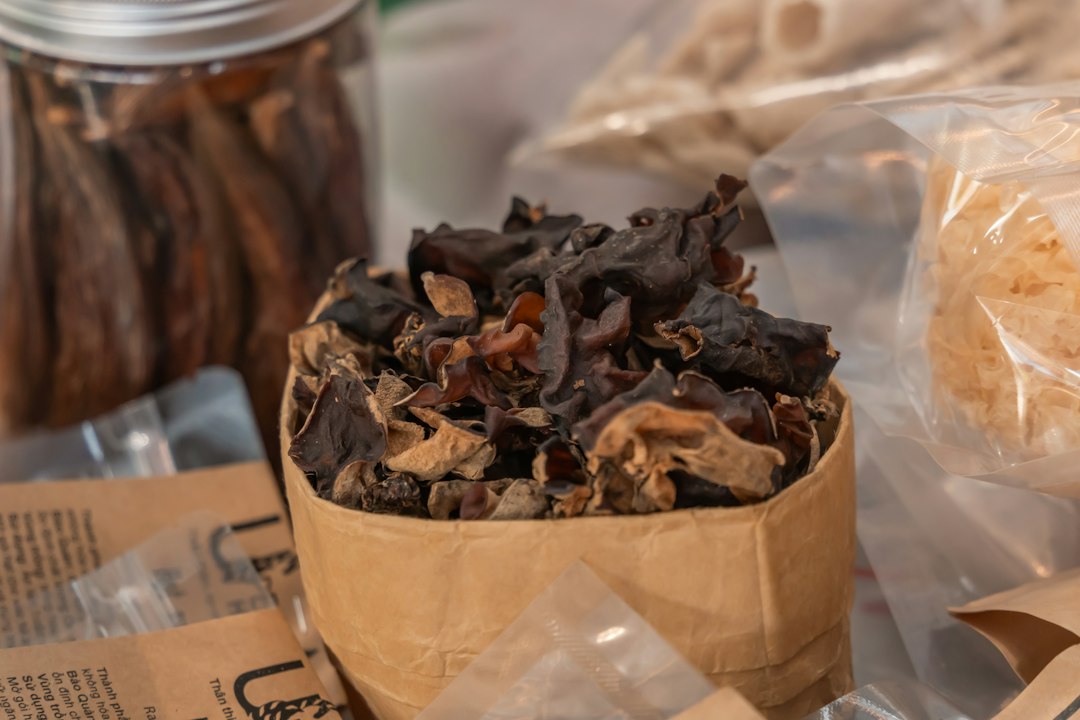
Wood ear (you’ll also see black fungus or cloud ear) looks like a pile of dark, brittle crisps in the bag. Drop it in water and it swells to several times its size, turning into soft, frilly, almost see through pieces. It hardly tastes of anything. That’s the point. You want it for crunch, a springy little snap that makes a dish more interesting to eat.
It turns up in hot and sour soup next to the day lily buds, in stir fries with egg and pork, and in a really good cold salad that we’d push anyone to try (recipe below). If you enjoyed our piece on cooking with shiitake, wood ear is a natural next step.
Dried fungus keeps for months in the cupboard. The soaking step is where you need a bit of care.
Soaking it properly
Here’s where a lot of people go wrong, and we’ve been guilty of it too. The habit in many kitchens is to leave a big bowl of fungus soaking on the worktop in the morning and use it at dinner. Not a risk worth taking.
Soaked fungus is damp and full of nutrients, and bacteria love that. The Centre for Food Safety’s guidance on soaking dried mushrooms is to avoid soaking big batches at once and to keep it to about two hours at room temperature, moving it to the fridge if it’ll need longer. Use it soon after soaking, and throw it out if it’s slimy or smells odd. There have been rare but serious poisoning cases linked to fungus left soaking far too long, because a particular bacterium can make a toxin that cooking won’t destroy. Rare, yes. But the fix costs you nothing.
Our routine is simple. Soak only what you’re going to cook, in cold water, in the fridge. An hour or two usually does it. Then rinse, trim off the hard knobbly bit where it grew on the wood, and tear it into bite sized pieces.
Try this: cold wood ear salad
Blanch your soaked wood ear in boiling water for a minute or two, drain it and cool it under the cold tap. Toss with a crushed clove of garlic, a splash of black vinegar and a little light soy sauce. Add a few drops of sesame oil, and some sliced chilli if you like heat. A pinch of sugar rounds it off. Leave it ten minutes so everything settles. It’s crunchy and sharp, and frankly a bit addictive next to rich dishes.
3. Red dates (hong zao)
Red dates are dried jujubes, a small fruit that’s been grown in China for thousands of years. Fresh ones are crisp, a bit like a tiny apple. Dried, they go wrinkly and deep red, with a sweet, almost caramel flavour and a spongy texture.
They’re everywhere in Chinese home cooking. Sweet soups, congee, steamed chicken, braised pork, herbal teas. Lots of families drop two or three into a pot of soup out of pure habit, the way you might add a bay leaf. They bring a gentle sweetness without any added sugar.
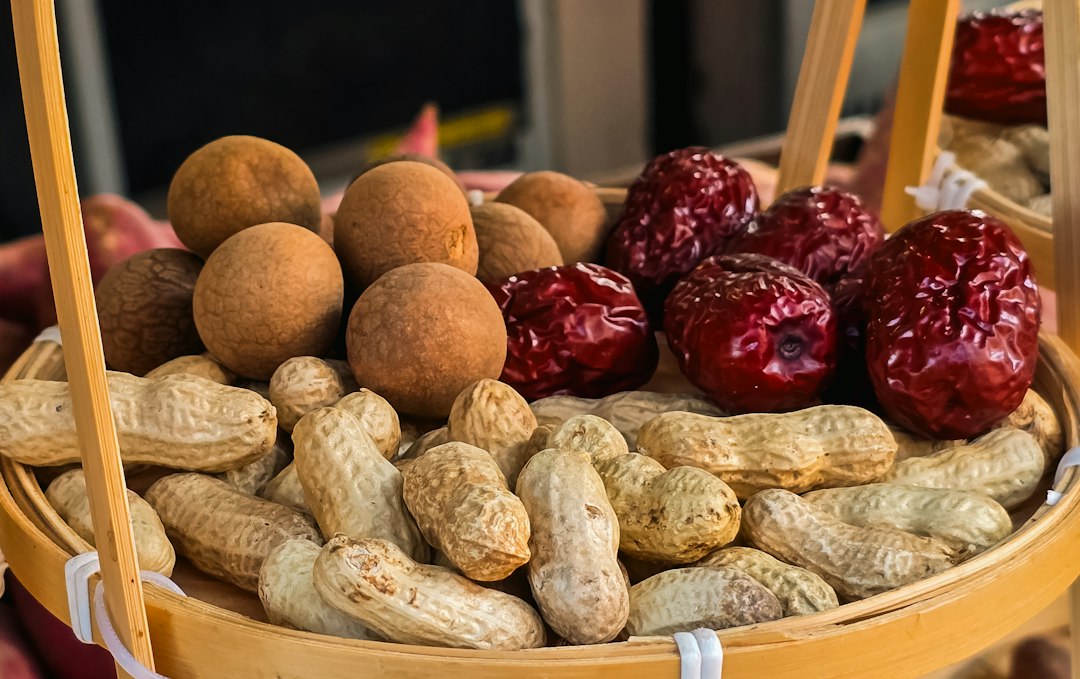
Red dates (left) with longans and peanuts. All three are common in Chinese sweet soups.
A few practical tips. Rinse them first, because they can be dusty. If they’re going in a soup, cut a slit in each one or tear them open so the flavour gets out. The stone inside is hard, so take it out if anyone’s eating the date itself, especially children. Look for dates that are plump and glossy, not rock hard or dusted with a white bloom.
Like any dried fruit, they’re a concentrated source of natural sugar, so a few go a long way. Brilliant in cooking. A whole bag as a desk snack is probably not doing your teeth any favours. We use red dates in a breakfast pancake in our Chinese herbal feast recipes, if you fancy a sweet start to the day.
4. Lotus seeds (lian zi)
Lotus seeds come from the lotus plant and are usually sold dried, either white with the skin removed or brown with it on. They’re small and round, roughly the size of a chickpea, and when cooked they turn soft and starchy with a mild, chestnut like flavour.
They’re a favourite in sweet soups and desserts, and you’ll find them in savoury soups with pork ribs or chicken too. Lotus seed paste is the filling in a lot of mooncakes, which tells you how happily they take to sweetness.
Watch out for the bitter centre
Many lotus seeds have a small green sprout running through the middle, and it’s very bitter. Some packets come with it already removed (they’ll often be split in half). If yours are whole, soak them for a couple of hours, split them and push the green bit out with a toothpick. Fiddly? A little. Worth it, unless you like a mouthful of bitterness in your pudding.
Dried lotus seeds need a fair bit of cooking. Soak them for a few hours or overnight, then simmer for 30 to 60 minutes until they’re soft right through. They won’t go to mush unless you really overdo it.
5. Ginger (sheng jiang)
Okay, ginger isn’t exactly mysterious. You’ve probably got a knob of it in the fridge right now. It earns its spot here because it does so much of the heavy lifting in Chinese cooking, and because people often don’t realise that fresh and dried ginger are treated as quite different ingredients.
Fresh ginger goes into stir fries, steamed fish, soups and marinades. It’s bright and zingy, and Chinese cooks often use it to balance richer or fishier flavours. Slice it into coins for soup, cut fine matchsticks for steamed fish, or grate it into a dipping sauce with soy and vinegar for dumplings.
Dried ginger (gan jiang) is hotter and more pungent, and more common in herbal soups and teas than in everyday stir fries. If a recipe asks for dried ginger slices, don’t swap in ground ginger from the baking aisle and expect the same result.
A tip from our kitchen. You don’t need a knife to peel ginger and lose half of it in the process. Scrape the skin off with the edge of a teaspoon. Done.
In normal food amounts ginger suits most people fine. Concentrated ginger supplements are another matter, and if you take blood thinning medicine it’s worth checking with your pharmacist before you start them.
Your starter pantry at a glance
Ingredient
What it brings
Prep
Day lily buds
Musky sweetness and a tender chew
Soak 20 to 30 minutes, snip the stems
Wood ear fungus
Crunch, very little flavour
Soak in the fridge, trim the base
Red dates
Natural sweetness for soups and congee
Rinse and slit them. Mind the stone.
Lotus seeds
Soft and starchy
Soak, pick out any green centre, simmer
Fresh ginger
Warmth and zing
Scrape with a spoon
A weeknight dish that uses three of them
Want to try a few of these at once? This steamed chicken is about as easy as Chinese home cooking gets. It serves two, and the hands on time is maybe fifteen minutes.
2 boneless chicken thighs, cut into chunks
6 red dates, stoned and halved
A small handful of soaked wood ear, torn into pieces
4 or 5 thin slices of fresh ginger
1 tbsp light soy sauce, 1 tsp Shaoxing wine, 1 tsp cornflour and half a tsp sesame oil
A spring onion, sliced, to finish
Toss the chicken with the soy sauce, wine, cornflour and sesame oil and leave it for ten minutes. Spread it out on a heatproof plate that fits your steamer, then scatter over the dates, wood ear and ginger. Steam over a high heat for 15 to 18 minutes, until the chicken is cooked right through with no pink in the middle. Throw the spring onion on top and serve with rice.
The dates sweeten the juices and the ginger keeps everything fresh, while the wood ear gives you that bit of crunch. Fancy adding day lily buds as well? Go for it. Knot a few and tuck them in with everything else.
Buying and storing
An Asian supermarket will nearly always be cheaper than the world foods shelf in a big chain, and stock tends to move faster, so it’s fresher. Look for a clear best before date and packaging that’s properly sealed. Day lily buds should be golden, not dark brown or black. Red dates should smell sweet rather than musty.
Once a bag’s open, keep it in an airtight jar somewhere cool and dry. Damp is the enemy of dried goods. If anything grows mould, smells sour or has little holes where something’s been nibbling, bin the lot instead of trying to rescue it.
Some dried goods are treated with sulphites to hold their colour. If you’re sensitive to sulphites, check the label, and give everything a good rinse before soaking.
When to check with a professional
These ingredients are foods, and in normal cooking amounts they suit most people. A few situations are worth a quick chat first.
You’re pregnant or breastfeeding and thinking of using any of them in large or concentrated amounts, such as strong herbal soups every day.
You take regular medication, blood thinners in particular, and want to use ginger or other herbs as supplements.
You get stomach pain, vomiting or diarrhoea after eating any of them. Speak to your GP, or call NHS 111 if you’re worried.
Frequently asked questions
Are dried day lily buds safe to eat?
Yes, for most people. The natural toxin in fresh flowers is broken down by drying and cooking. Just soak and cook them the way your recipe says.
How long can I leave wood ear soaking?
About two hours at room temperature, no more. If you need longer, soak it in the fridge and cook it soon after. Bin any that turns slimy or smells off.
Do I need to stone red dates?
Not for soups, where they’re mostly there for flavour. If anyone’s going to eat the dates whole, take the stones out first. They’re hard, and not something you want a child biting down on.
Where can I buy these in the UK?
Any Asian supermarket should have all five, and plenty sell online too. Bigger supermarkets sometimes carry red dates and wood ear in their world foods aisle.
Can I use these herbs as medicine?
We’d say no. They have a long history in Chinese cooking and herbal practice, but at home we treat them as ingredients that make food taste better, not as a treatment for anything.
Which one should a beginner start with?
Red dates, honestly. Rinse a few, tear them open and drop them into your next pot of soup or congee. Very hard to get wrong.
Just so we’re clear, this is general food and cooking info, not medical advice. If you’ve got a health condition or take medication, your GP or pharmacist knows your situation best.