

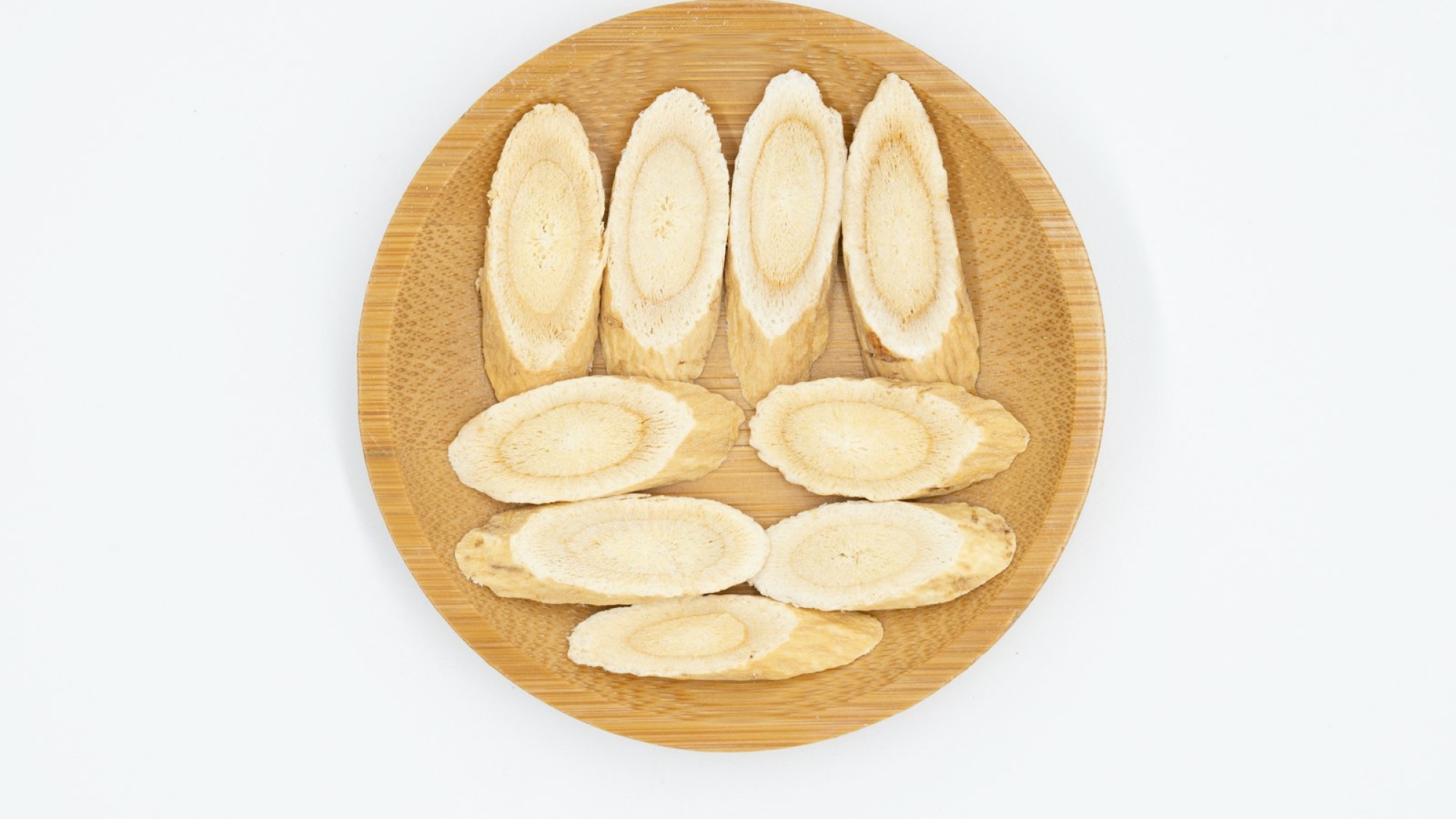
Walk into a Chinese supermarket in November and you will probably find bags of pale, flat, slightly woody slices next to the dried mushrooms and red dates. That is astragalus root, known in Chinese as huang qi, and it is one of the best known herbs in Chinese medicine. Families have simmered it into soups for generations, especially as the weather turns cold. In this article we look at what astragalus is, how it has been used traditionally, what modern research has and has not shown, and who should give it a miss.
Key takeaways
- Astragalus is the dried root of Astragalus membranaceus or a close relative, grown mainly in northern China.
- It has been used as a tonic in Chinese medicine for more than 2,000 years and is often added to winter soups.
- The US National Center for Complementary and Integrative Health says there is not enough reliable evidence that it helps with any health condition.
- Much of the research on how it works comes from lab and animal studies, and the human trials so far are small.
- People with autoimmune conditions, those on immunosuppressant medicines and anyone pregnant or breastfeeding should avoid it unless advised otherwise.
What is astragalus?
Astragalus is a flowering plant in the pea and bean family. The part used is the root, which is harvested, dried and usually cut into long, thin slices. A 2024 review in the journal Chinese Medicine explains that the herb comes from Astragalus membranaceus or a closely related variety, cultivated mainly in northern China. Wild populations have fallen sharply, so the astragalus used today is almost all farmed.
The genus is huge, with many species around the world, and some of them are poisonous to grazing animals. That is one practical reason to buy astragalus only from a reputable supplier who can confirm exactly which plant it is.
Astragalus in traditional Chinese medicine
The same review notes that astragalus was first recorded as a high grade tonic in Shennong’s Classic of Materia Medica, one of the oldest Chinese herbal texts, and has been in use for over 2,000 years. In traditional theory it is described as warm and sweet, and it is associated with the spleen and lung. Practitioners use it to tonify qi, the body’s vital energy, and to support what is called the exterior, the body’s outer defensive layer.
This idea of strengthening the exterior is why astragalus is so closely linked with the colder months in Chinese food culture. It appears in classical formulas such as Yupingfeng San and Huangqi Jianzhong Tang, and in countless family soup recipes. Those uses come from a traditional framework that is quite different from modern Western medicine, and it is worth keeping the two separate when you read about the herb. If you are curious about how the two approaches meet, our article on integrating TCM with modern wellness is a good next read.
What is in astragalus?
Researchers have isolated more than 200 compounds from astragalus root. According to the 2024 review, the main groups are:
- Polysaccharides: large carbohydrate molecules, considered the main active group.
- Saponins: around 40 have been identified, including astragaloside IV, which is used as a quality marker in pharmacopoeias.
- Flavonoids: more than 30, such as calycosin and formononetin, although the body absorbs these poorly.
What does the research say?
There is a lot of published research on astragalus, but most of it is laboratory and animal work. The 2024 review covers cell and animal studies looking at effects on the immune system, inflammation and oxidative stress, among others. These studies help scientists understand how the herb’s compounds behave, but they do not show what happens when a person drinks astragalus soup or takes a supplement.
Human evidence is more limited. The NCCIH fact sheet on astragalus sums it up plainly: there is not enough reliable evidence to show that astragalus helps with any health condition. It mentions a 2023 review of 19 studies with 1,094 participants that reported stronger immune responses and lower levels of inflammatory markers, but the studies were small and varied a great deal in their design. Other reviews have looked at astragalus added to conventional treatment for specific illnesses, and NCCIH describes most of those studies as low quality.
So the honest summary is that astragalus has a long traditional history and plenty of interesting early research, and well designed human trials are still needed before anyone can say what it does in people. This is similar to what we found when we looked at the research on cordyceps earlier this month.
How astragalus is used in the kitchen
In Chinese homes, astragalus is most often used as a soup herb. A few dried slices are simmered for an hour or more in a broth, usually alongside ingredients such as chicken, pork ribs, red dates, goji berries or dried shiitake. The root gives a mild, slightly sweet, earthy flavour. The slices stay tough and fibrous, so most people lift them out before serving, in the same way you would a bay leaf.
For reference, the 2024 review notes that the Chinese Pharmacopoeia suggests 9 to 30g of the dried root a day when it is used as a herbal medicine. A family soup typically uses far less per serving. If you would like to understand how practitioners combine herbs like astragalus, the Phoenix Academy of Acupuncture and Herbal Medicine teaches Chinese herbal medicine in depth. We will also be sharing some warming soup ideas that use it later this month. You can also find inspiration in our pieces on goji berry dishes and culinary herbs for Asian recipes.
Safety: who should avoid astragalus?
NCCIH says astragalus may be safe for most adults when taken by mouth. Doses of up to 60g a day for around four months did not appear to cause problems in studies, but its safety has not been thoroughly evaluated. There are some important exceptions:
- Autoimmune conditions: NCCIH advises people with autoimmune diseases to avoid astragalus, as it may make symptoms worse.
- Immunosuppressant medicines: astragalus may interact with drugs that dampen the immune system, such as those taken after an organ transplant.
- Pregnancy and breastfeeding: safety is unknown, and animal research suggests it may be harmful to an unborn baby.
- Quality: the 2024 review flags adulteration and variable quality in the market, so choose a supplier you trust.
Practical takeaways
- Enjoy astragalus as a traditional soup ingredient and part of a varied winter diet.
- Treat health claims you see online with caution, as the human evidence is still thin.
- Buy dried root from a reputable source that names the species.
- Check with a pharmacist or a qualified herbal practitioner before using it regularly, particularly if you take medicines.
When to speak to your GP or pharmacist
Get personal advice before using astragalus as a supplement or regular remedy if you:
- Are pregnant, breastfeeding or trying for a baby
- Have an autoimmune condition such as rheumatoid arthritis, lupus or multiple sclerosis
- Take immunosuppressant medicines or any other regular medication
- Are managing a long term health condition or are due to have surgery
Frequently asked questions
What is huang qi?
Huang qi is the Chinese name for astragalus root, the dried root of Astragalus membranaceus or a close relative. It has been used as a tonic in Chinese medicine for more than 2,000 years.
Does astragalus boost the immune system?
Lab and animal studies suggest its compounds affect immune cells, and some small human studies have reported changes in immune markers. However, NCCIH says there is not enough reliable evidence to show that astragalus helps with any health condition.
How do you cook with astragalus?
Add a few dried slices to a soup or broth and simmer for an hour or more. The slices are too tough to eat, so remove them before serving.
Who should not take astragalus?
People with autoimmune conditions, those taking immunosuppressant medicines and anyone who is pregnant or breastfeeding should avoid it unless a health professional advises otherwise.
Astragalus is a good example of a herb with deep roots in tradition and a research story that is still being written. To read more summaries of the science behind herbs and mushrooms, visit our Research hub.
This article is for general information only. Please speak to your GP or pharmacist before starting any supplement or herbal remedy, especially if you are pregnant, taking medication or managing a health condition.
Sources
- National Center for Complementary and Integrative Health. Astragalus.
- Zhang Y et al. (2024). Astragali radix (Huangqi): a time honored nourishing herbal medicine. Chinese Medicine, 19:119.