

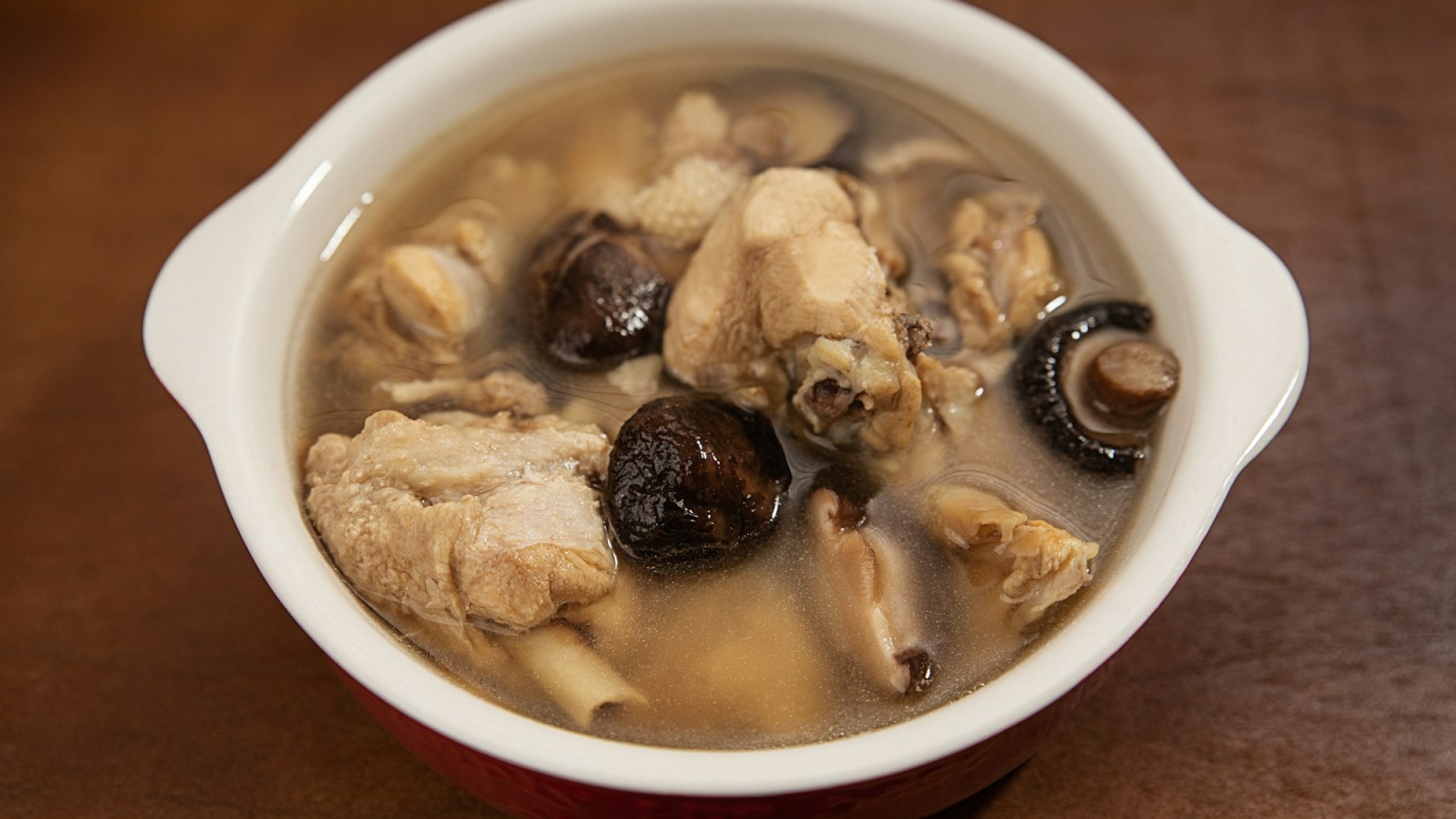
In many Chinese households, winter means a pot of soup quietly simmering on the hob for most of the afternoon. These soups are rarely complicated. They lean on a small cupboard of dried ingredients, such as shiitake mushrooms, red dates, goji berries and slices of astragalus root, along with fresh ginger and whatever meat or vegetables are to hand. The result is a clear, gently sweet broth that is very comforting on a cold evening. Here is a short guide to the ingredients, two easy recipes to try, and a few safety tips worth knowing.
Key takeaways
- A few dried staples from an Asian supermarket will see you through a whole winter of soups.
- Shiitake should always be cooked thoroughly, as raw or undercooked shiitake can cause a skin reaction in some people.
- Goji berries can interact with warfarin, and astragalus is not suitable for everyone, so check if you take medicines.
- Use low salt stock and go easy on soy sauce to keep the salt down.
- Cool leftovers quickly, keep them in the fridge and reheat until steaming hot.
The store cupboard
Dried shiitake mushrooms
Dried shiitake have a deeper, smokier flavour than fresh ones, and their soaking water makes an excellent base for stock. Soak them in warm water for about 30 minutes, or in cold water overnight, then trim off the tough stalks. Our article on shiitake mushrooms covers more about this popular fungus.
Shiitake have also been the subject of some interesting nutrition research. In a 2015 study in the Journal of the American College of Nutrition, 52 healthy adults aged 21 to 41 ate a portion of cooked shiitake every day for four weeks. Blood tests at the end showed better functioning gamma delta T cells, a type of immune cell, and lower levels of some inflammatory proteins. It was a small, short study in young, healthy people, so it does not tell us whether shiitake affects illness, but it is a nice reason to keep them on the menu.
Red dates
Dried red dates, also called jujubes or hong zao, add a gentle natural sweetness to broths. Rinse them, and either leave them whole or cut a slit in the side so the flavour comes out more easily. Some cooks remove the stones first.
Goji berries
Goji berries are usually added towards the end of cooking so they keep their shape and colour. A small handful is enough for a family sized pot. For more ways to use them, see our goji berry dishes.
Astragalus root
Pale slices of astragalus root, or huang qi, are a classic winter soup herb in Chinese cooking. They add a mild, earthy sweetness and are lifted out before serving because they stay woody. We looked at its traditional uses, the research and who should avoid it in our recent article on astragalus. Soup is one of the oldest ways of enjoying traditional herbs like these. Readers in Germany can find Chinese herbs like these through China Purmed.
Fresh ginger and spring onions
A few slices of fresh ginger give warmth and freshness, and spring onions scattered on top just before serving add colour and a little bite.
Recipe 1: Chicken, shiitake and red date soup
This is an easy, slow simmered soup for a weekend afternoon. Serves four.
Ingredients
- 4 bone in chicken thighs or 2 chicken legs, skin removed
- 8 dried shiitake mushrooms, soaked and stalks removed (keep the soaking water)
- 6 dried red dates, rinsed
- 4 or 5 slices of dried astragalus root (optional)
- A thumb sized piece of fresh ginger, sliced
- 2 carrots, cut into chunks
- 1 tablespoon goji berries
- 1.5 litres water or low salt chicken stock
- Spring onions and a little white pepper to serve
Method
- Put the chicken in a large pan, cover with cold water and bring to the boil. Simmer for 3 minutes, then drain and rinse. This gives a clearer broth.
- Return the chicken to the pan with the water or stock, the strained mushroom soaking water, shiitake, red dates, astragalus (if using), ginger and carrots.
- Bring to the boil, then turn down and simmer gently with the lid slightly ajar for about 1 hour 30 minutes, until the chicken is very tender and cooked through.
- Add the goji berries for the last 10 minutes.
- Remove the astragalus slices and ginger. Taste and season lightly, then serve topped with spring onions and white pepper.
Recipe 2: Tofu, shiitake and greens soup
A quicker vegetarian option that is ready in about 40 minutes. Serves four.
Ingredients
- 8 dried shiitake mushrooms, soaked and sliced (keep the soaking water)
- 1.2 litres low salt vegetable stock
- A thumb sized piece of fresh ginger, sliced
- 4 dried red dates, rinsed
- 200g firm tofu, cubed
- 2 heads of pak choi or a large handful of spinach
- 1 tablespoon goji berries
- 1 teaspoon reduced salt soy sauce and a few drops of sesame oil
Method
- Pour the stock and strained mushroom soaking water into a pan. Add the shiitake, ginger and red dates.
- Bring to the boil, then simmer gently for 25 minutes so the shiitake are thoroughly cooked and the broth picks up their flavour.
- Add the tofu and goji berries and simmer for 5 minutes.
- Stir in the greens and cook for 2 to 3 minutes until just wilted.
- Remove the ginger, add the soy sauce and sesame oil, and serve straight away.
Cooking safely with herbs and mushrooms
Always cook shiitake well
Eating raw or undercooked shiitake can cause shiitake dermatitis, an itchy rash of streaky, whip like marks that affects some people. A 2022 case report and review in EMJ Allergy and Immunology explains that thorough cooking breaks down lentinan, the compound thought to be involved, so simmering shiitake well in a soup is a good way to enjoy them.
Check your medicines
The Memorial Sloan Kettering Cancer Center herb database reports a few cases of raised INR, a measure of blood clotting, in people taking warfarin who also consumed goji products. If you take warfarin or another anticoagulant, leave the goji berries out or check with your pharmacist first. Astragalus is not recommended for people with autoimmune conditions, those on immunosuppressant medicines or during pregnancy and breastfeeding, so leave it out in those cases too. The soups are still delicious without them.
Keep the salt down
Stock cubes and soy sauce can add a lot of salt. Adults are advised to keep to no more than 6g of salt a day, so use low salt stock, taste before seasoning and let the ginger, mushrooms and dates do the work. Diabetes UK also suggests using herbs and spices for flavour in place of salt, which suits this style of cooking well.
Store leftovers properly
Soup made in a big batch is great for lunches. Cool it as quickly as you can, then cover it and put it in the fridge or freezer. When reheating, make sure it is steaming hot all the way through. The Food Standards Agency has more guidance on chilling and freezing food safely at home.
Practical tips
- Store dried ingredients in airtight jars in a cool, dark cupboard.
- Save mushroom soaking water for stocks, gravies and stir fries.
- Add a handful of lentils or extra vegetables to stretch a pot further and add fibre.
- Make a double batch and freeze individual portions for busy weeknights.
When to speak to your GP or pharmacist
These soups use everyday food amounts, but it is worth getting advice before cooking with herbs such as astragalus or goji regularly if you:
- Are pregnant or breastfeeding
- Take warfarin or another blood thinner, immunosuppressants or other regular medicines
- Have an autoimmune condition or any long term health condition
- Have a known food allergy, especially to fruits or pollens
Frequently asked questions
Where can I buy these ingredients?
Dried shiitake, red dates, goji berries and astragalus slices are sold in most Chinese and Asian supermarkets and online. Many larger UK supermarkets also stock dried shiitake and goji berries.
Can I use fresh shiitake instead of dried?
Yes, although the flavour will be milder. Whichever you use, make sure they are cooked thoroughly, as raw or undercooked shiitake can cause a skin reaction in some people.
Do you eat the astragalus slices?
No. They stay tough and fibrous, so lift them out before serving, as you would a bay leaf.
Can I freeze Chinese herbal soup?
Yes. Cool it quickly, freeze it in portions and reheat until steaming hot all the way through. Greens and tofu are best added fresh when reheating.
A pot of soup is one of the simplest ways to bring traditional ingredients into everyday winter cooking. For more on the evidence behind herbs and mushrooms, visit our Research hub.
This article is for general information only. Please speak to your GP or pharmacist before starting any supplement or herbal remedy, especially if you are pregnant, taking medication or managing a health condition.
Sources
- Dai X et al. (2015). Consuming Lentinula edodes (shiitake) mushrooms daily improves human immunity: a randomized dietary intervention in healthy young adults. Journal of the American College of Nutrition.
- Wu K, de Menezes S, Robinson A (2022). Flagellate erythema: a case of shiitake dermatitis and review of pathogenesis. EMJ Allergy and Immunology.
- Memorial Sloan Kettering Cancer Center. Lycium. About Herbs database.
- National Center for Complementary and Integrative Health. Astragalus.
- Diabetes UK. 10 tips for healthy eating with diabetes.
- Food Standards Agency. How to chill, freeze and defrost food safely.